The “Animals” of Google
What Panda, Penguin and Hummingbird Still Teach Us About SEO Today
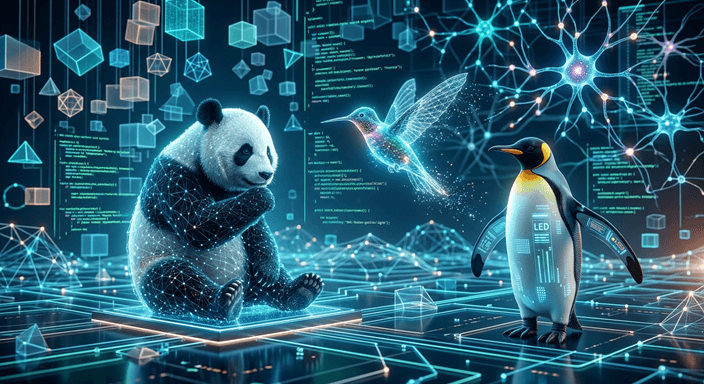
For many years, digital marketers spoke about Google as if it were a forest full of strange animals. Panda arrived and punished thin content. Penguin arrived and hunted unnatural links. Hummingbird arrived and changed how Google understood meaning. Pigeon influenced local search. Possum reshaped local visibility. Each name sounded almost playful, but each update carried a serious message: Google was becoming less tolerant of manipulation and far more interested in relevance, quality, trust and usefulness.
Today, Google no longer relies on those animal names in the same public way. Its modern search ecosystem is now shaped by core ranking systems, spam systems, helpful content signals, review systems, page experience considerations, entity understanding and increasingly AI-influenced interpretation. Google itself explains that its automated ranking systems examine many factors and signals across hundreds of billions of web pages to present useful, relevant results quickly.
But the “animals of Google” still matter because they help us understand the evolution of search. They show how SEO moved from mechanical optimisation into something more intelligent, more human and more demanding. In the age of SEO, AIO, GEO, AEO and LLMO, these animals are no longer just history. They are the roots of the visibility environment we now operate in.
PANDA: The Content-Quality Animal
Google Panda was the animal that forced the SEO industry to take content quality seriously. Before Panda, many websites could rank with shallow pages, duplicated text, keyword-stuffed articles and content created mainly to satisfy search engines rather than people. Panda changed that conversation.
The deeper lesson of Panda was simple: content must deserve visibility. It must be useful, original, relevant and substantial enough to help the person searching. A page cannot survive on keywords alone. It needs purpose, structure, clarity and real value.
This matters even more today. Google’s modern systems continue to reduce low-quality and unoriginal content, with Google stating that its March 2024 core update was designed to reduce unhelpful, unoriginal results and bring helpful content signals more deeply into its core systems.
For modern SEO and AIO, Panda’s legacy is this: every page must answer a real need. It must not exist simply because a keyword exists. It must have a reason to be indexed, ranked, cited, summarised and trusted.
A Panda-ready page today should show expertise, explain the topic properly, avoid duplication, answer related questions, use clear structure and give both humans and machines enough context to understand why the page matters.
PENGUIN: The Link Trust Animal
Penguin was Google’s warning to the link-building world. For years, websites tried to manipulate rankings through unnatural backlinks, link farms, exact-match anchor text, paid link schemes and artificial authority signals. Penguin made it clear that not all links are equal. Some links build trust, while others create risk.
The Penguin lesson is still alive in Google’s spam systems. Google says its automated spam detection systems are constantly operating and that notable improvements are released as spam updates.
In practical terms, Penguin taught us that authority must be earned. A website cannot simply collect links like trophies. It must build digital reputation through relevance, citations, brand mentions, editorial references, partnerships, useful resources and genuine industry presence.
This is now critical for AI visibility as well. Generative engines, answer engines and AI-powered search systems do not only look for pages that contain words. They look for signals of confidence. They need to understand whether a brand is real, referenced, consistent and trustworthy across the web.
Penguin’s modern message is clear: links should not be built to trick Google. They should be earned because the brand, content or resource is worth referencing.
HUMMINGBIRD: The Meaning Animal
Hummingbird was one of the most important shifts in Google’s history because it moved search further away from isolated keywords and closer to meaning, context and intent. It helped Google understand the relationship between words, questions and concepts.
This is where modern search truly begins to feel familiar to the AI era. A person no longer searches only in broken keyword fragments. They ask fuller questions. They compare. They investigate. They search with uncertainty. They expect Google, ChatGPT, Gemini, Perplexity and other AI systems to understand what they mean, not only what they typed.
Google’s own explanation of ranking highlights the importance of meaning, relevance, quality, usability and context when producing search results.
Hummingbird’s lesson for SEO is that content must be semantically rich. It must explain the subject, not merely repeat the keyword. A page about “Google Ads management” should naturally cover campaign structure, conversion tracking, keyword intent, landing pages, budget control, reporting, search terms, performance optimisation and business outcomes. A page about “AI SEO” should define the concept, explain how it differs from traditional SEO, describe the engines involved and connect the topic to entity trust, citations and answer visibility.
Hummingbird was the bird that taught marketers that Google was learning language. Today, AI systems are extending that same principle into summaries, answers, citations and conversational results.
PIGEON: The Local Search Animal
Pigeon is closely associated with local search. It reminded businesses that search visibility is not only about general rankings. It is also about location, proximity, relevance and local trust.
For South African businesses, this matters enormously. A business does not only need to rank for “SEO agency” or “plumber” or “aesthetic clinic”. It needs to be understood in relation to Cape Town, Johannesburg, Durban, Sandton, Century City, Claremont, Bellville, Pretoria or whichever market it serves.
Local SEO is now also local AI visibility. When a user asks an AI system for the best provider near them or asks Google for a local recommendation, the system needs enough structured evidence to understand who the business is, where it operates, what it offers, who it serves and why it should be considered.
Pigeon’s modern message is this: your location signals must be clean, consistent and reinforced across your website, Google Business Profile, citations, local content, reviews, service area pages and structured data.
POSSUM: The Filtering Animal
Possum affected local search filtering and visibility. Its broader lesson is that local results are not static. Two businesses can offer similar services in the same area, but Google may filter, rotate or interpret results differently depending on location, search wording and perceived relevance.
This is important because many businesses assume that once they have a Google Business Profile, they have “done local SEO”. That is not enough. Local visibility depends on a network of signals: categories, reviews, website relevance, service pages, location pages, proximity, authority and behavioural trust.
In an AI-search environment, the challenge becomes even deeper. A business must not only appear in local results. It must be easy for machines to describe accurately. The website must provide clear service definitions, geographic context, pricing or process information where appropriate, strong FAQs, trust signals and proof that the business is active and credible.
The Modern Zoo:
Core Updates, Spambrain, Helpful Content and AI Interpretation
The animal names are useful, but the modern Google ecosystem is far more complex. Today, Google talks more about core updates, ranking systems, spam updates and quality systems than about individual animal-branded releases. Google explains that core updates are broad changes to its search systems and that there is often no single page-level fix when rankings shift after a core update. The stronger response is to improve content quality, usefulness and overall site value. This is where the old animals merge into one larger idea: Google rewards websites that deserve interpretation.
That means the website must be technically accessible, semantically clear, useful to the user, trustworthy as a source, well-structured for crawling, rich enough for answers and consistent enough for AI systems to understand. It must speak to humans, search engines and generative engines at the same time.
This is why modern optimisation can no longer be treated as one discipline. SEO remains the foundation, but it now feeds AEO, GEO, AI SEO and LLMO. The same content that helps Google rank a page can also help Gemini summarise it, Perplexity cite it, ChatGPT understand it and answer engines lift it into a direct response.
How Businesses Should Respond
The correct response is not to chase every update in panic. The correct response is to build a stronger visibility ecosystem. A business should start with clear website architecture, strong service pages, original content, structured FAQs, schema markup, Google Business Profile optimisation, credible backlinks, local citations, review generation, fast page experience and proper conversion tracking.
Then it should go further. It should create content that answers real customer questions. It should define its services in language that both humans and machines understand. It should build entity consistency across platforms. It should monitor how AI systems describe the brand. It should reduce ambiguity, strengthen trust and make every important page easy to interpret. This is the modern version of surviving the Google zoo. You do not outrun the animals. You build the kind of website they were always trying to reward.
What the Animals Teach Us About the Art of Visibility
The animals of Google were never really about animals. They were about behaviour.
Panda asked whether your content was worth reading. Penguin asked whether your authority was real. Hummingbird asked whether your meaning was clear. Pigeon asked whether your local relevance was obvious. Possum asked whether your local signals were strong enough to survive filtering.
Together, they show us that visibility is earned through quality, relevance, trust and interpretation. This is the heart of The Art of Visibility. A brand is not visible simply because it has a website. It becomes visible when search engines can crawl it, when users can trust it, when AI systems can understand it and when the wider web gives enough supporting evidence for machines to choose it. The future of search is not only about ranking. It is about being understood, remembered and chosen.
Final Thought: The Animals Have Evolved
Panda, Penguin and Hummingbird may feel like old SEO history, but their lessons are more relevant than ever. Google’s systems are now more complex, more automated and more quality-focused. AI search has added another layer of interpretation. The machines are no longer only ranking pages. They are reading, comparing, summarising and recommending. The brands that win will not be the ones trying to trick the algorithm. They will be the ones that are easiest to understand, hardest to ignore and strongest to trust. That is what the animals of Google were teaching us all along.